The stage at Agia Triada
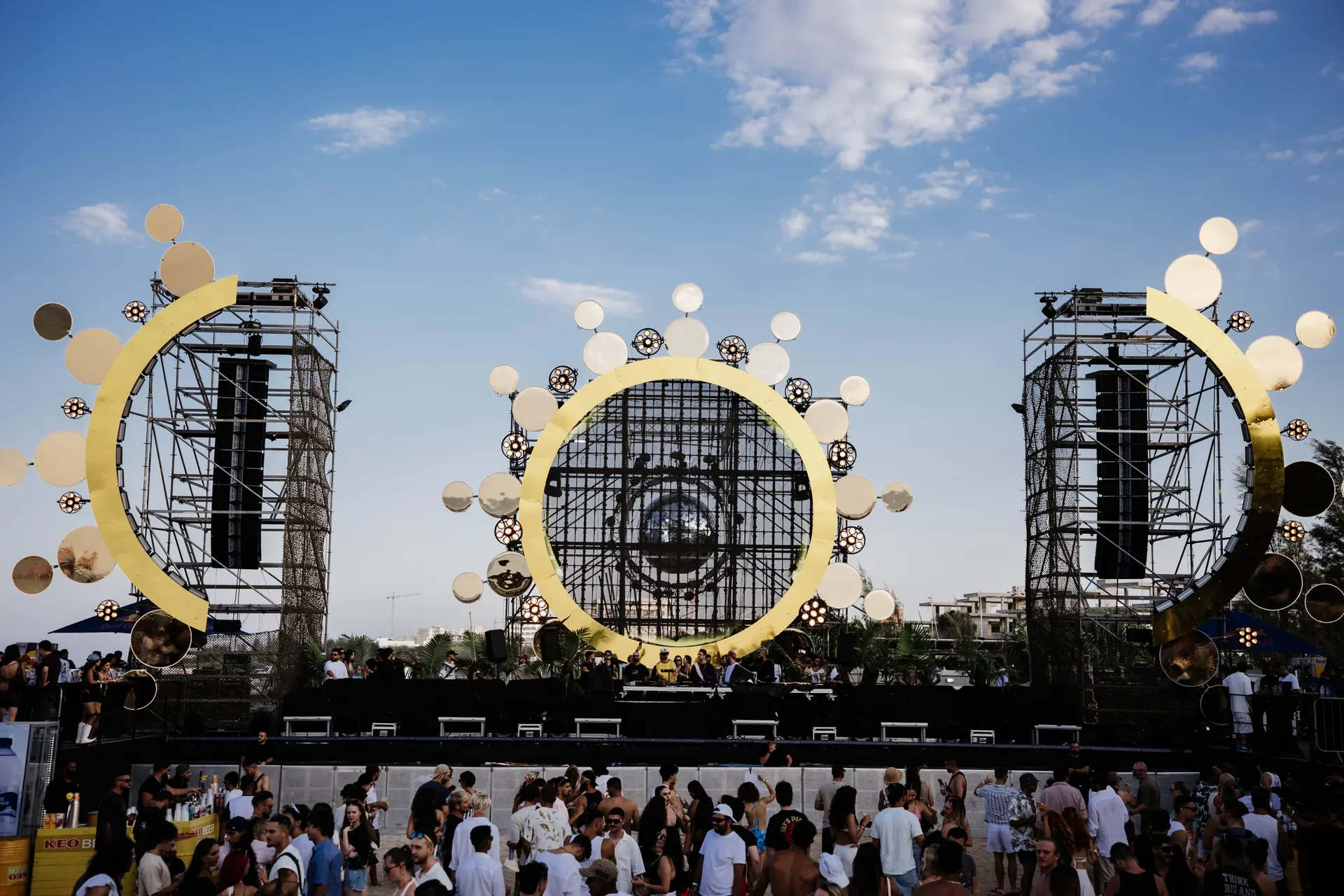
The stage at First Signal changed with the day. In the afternoon, its gold circles stood against the open sky. As the light faded, those same shapes became the brightest points on the beach.
At the centre was a full circle framing the performance area, with two curved structures on either side. Smaller reflective discs carried the shape across the whole stage. In daylight, you could see the framework, the suspended speakers and the details of its construction. It had a physical presence before the lighting took over.
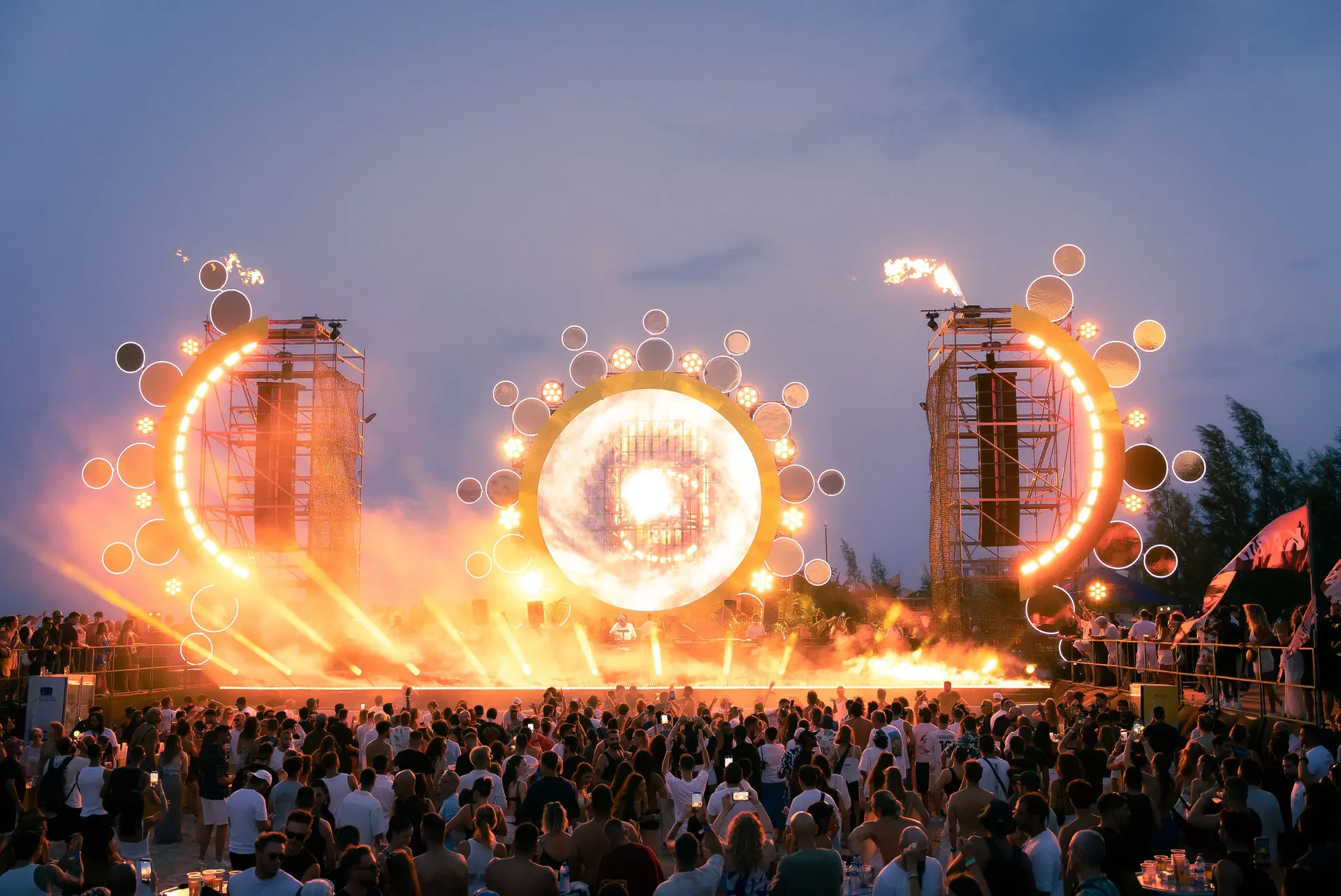
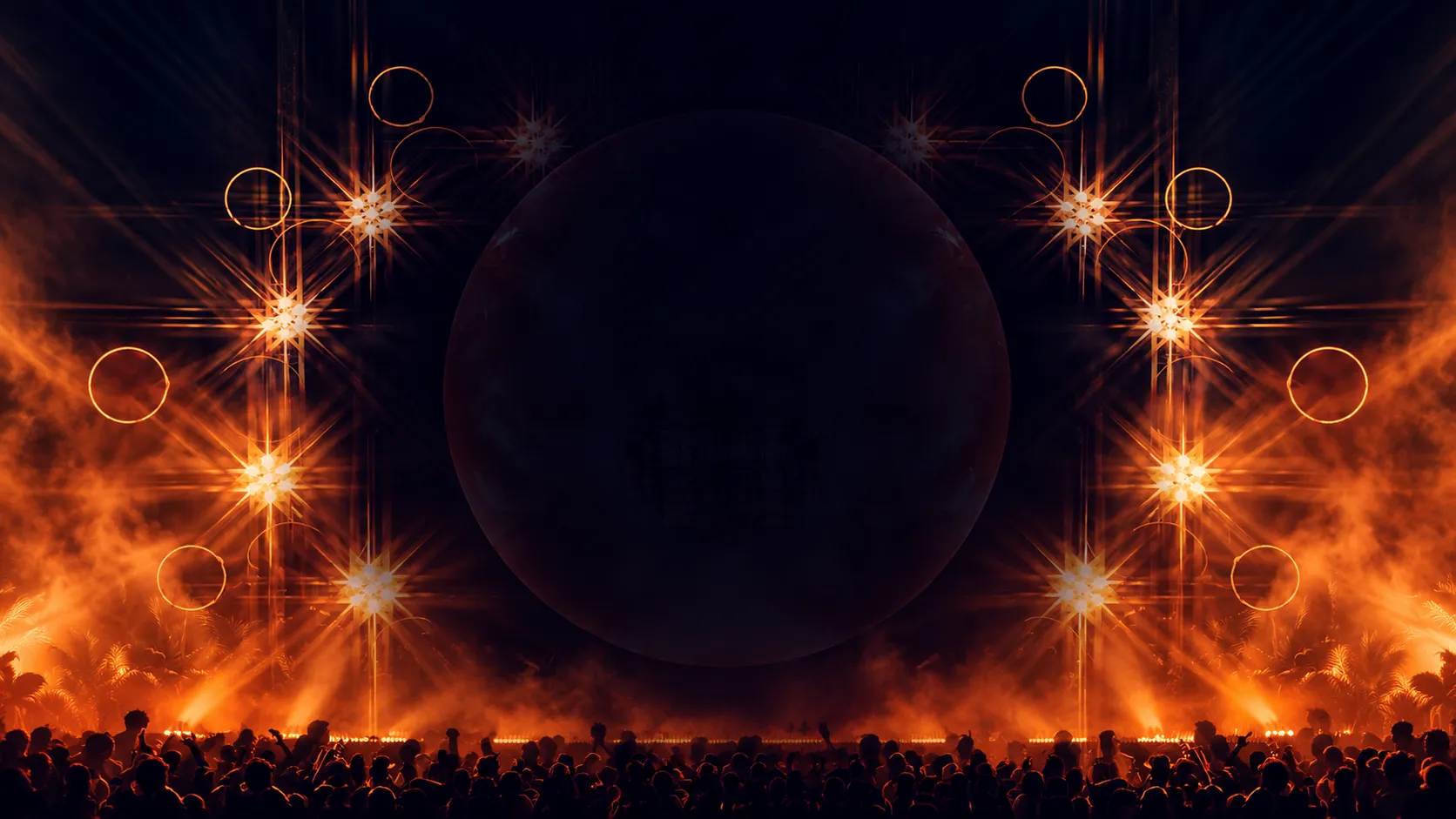
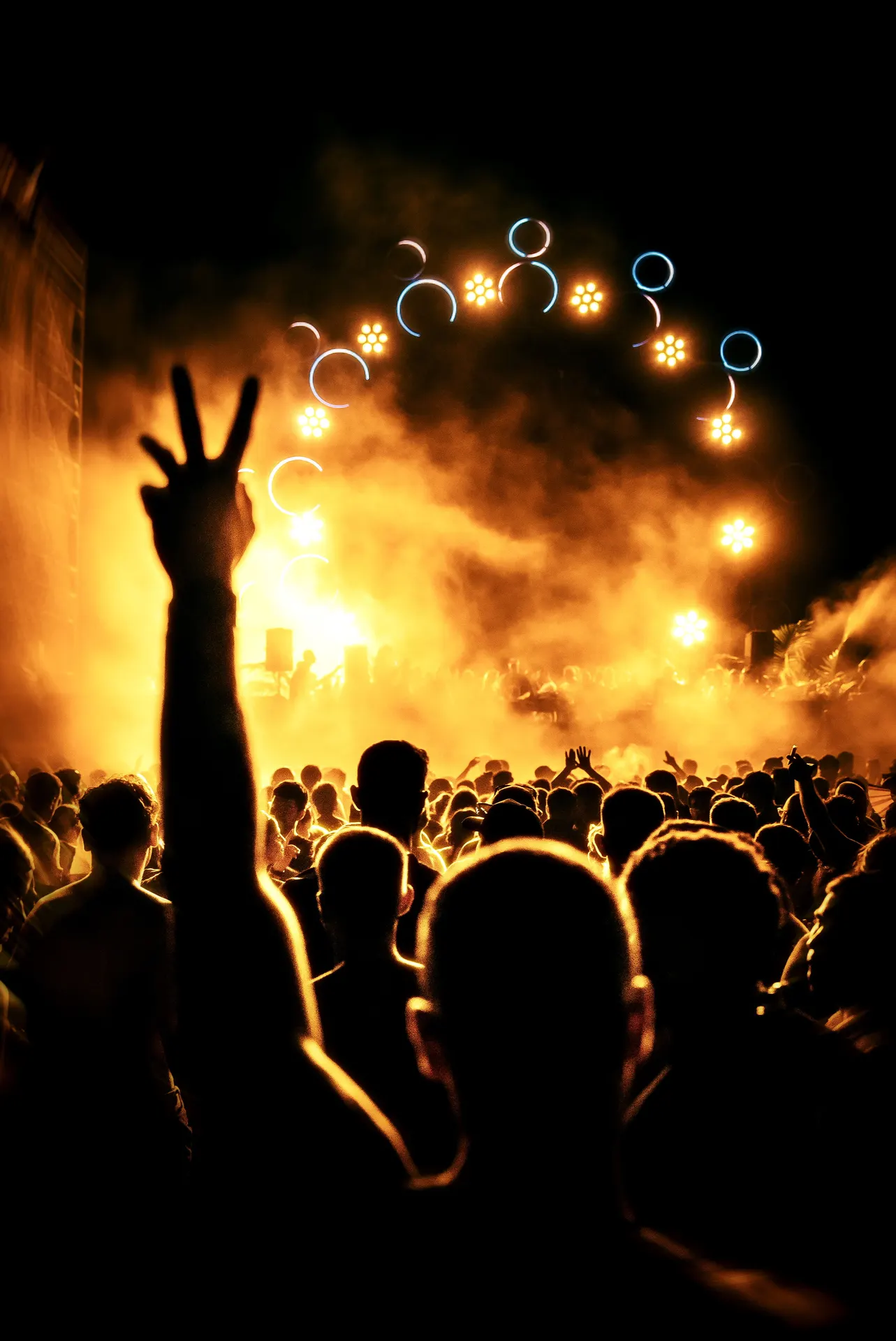
Sunset brought a different view. The gold surfaces caught the remaining daylight while the illuminated edges began to stand out. Later, beams of light, haze and the central visuals changed how the structure appeared from the crowd.
The circular forms became a recognisable part of First Signal. They appear behind the artists, above the raised hands and across the wide photographs of the beach. Looking back through those images, they connect the quieter afternoon scenes with the intensity of the night.
Behind that view was the work of the people who assembled the structure, installed the equipment and operated the show. The sound and lighting teams, stage crew and production staff all contributed to what the audience experienced. A photograph captures one moment of their work; the event depended on their attention throughout the day.
For KAMAYA’s first edition, this was the place where the music and the gathering met. The photographs show it most clearly once the crowd arrives: the stage fills one side of the frame, and the people give the other side its movement.
Explore the First Signal photo chapters to see it from daylight through to the final hours.